







What Vastu Shastra is
Vastu Shastra is the traditional Indian science of building: how to choose a plot, set a house to the directions, place its rooms, and measure it. It belongs to the same family of knowledge as Jyotisha and the Agamas, and it was written down by temple architects (sthapatis) and scholars over many centuries.
Its central idea is simple. A house is laid out on a grid called the Vastu Purusha Mandala, aligned to the four cardinal directions. Each part of the grid has a presiding devata and a natural use. When the use matches the zone, the house is comfortable, well lit and easy to live in.
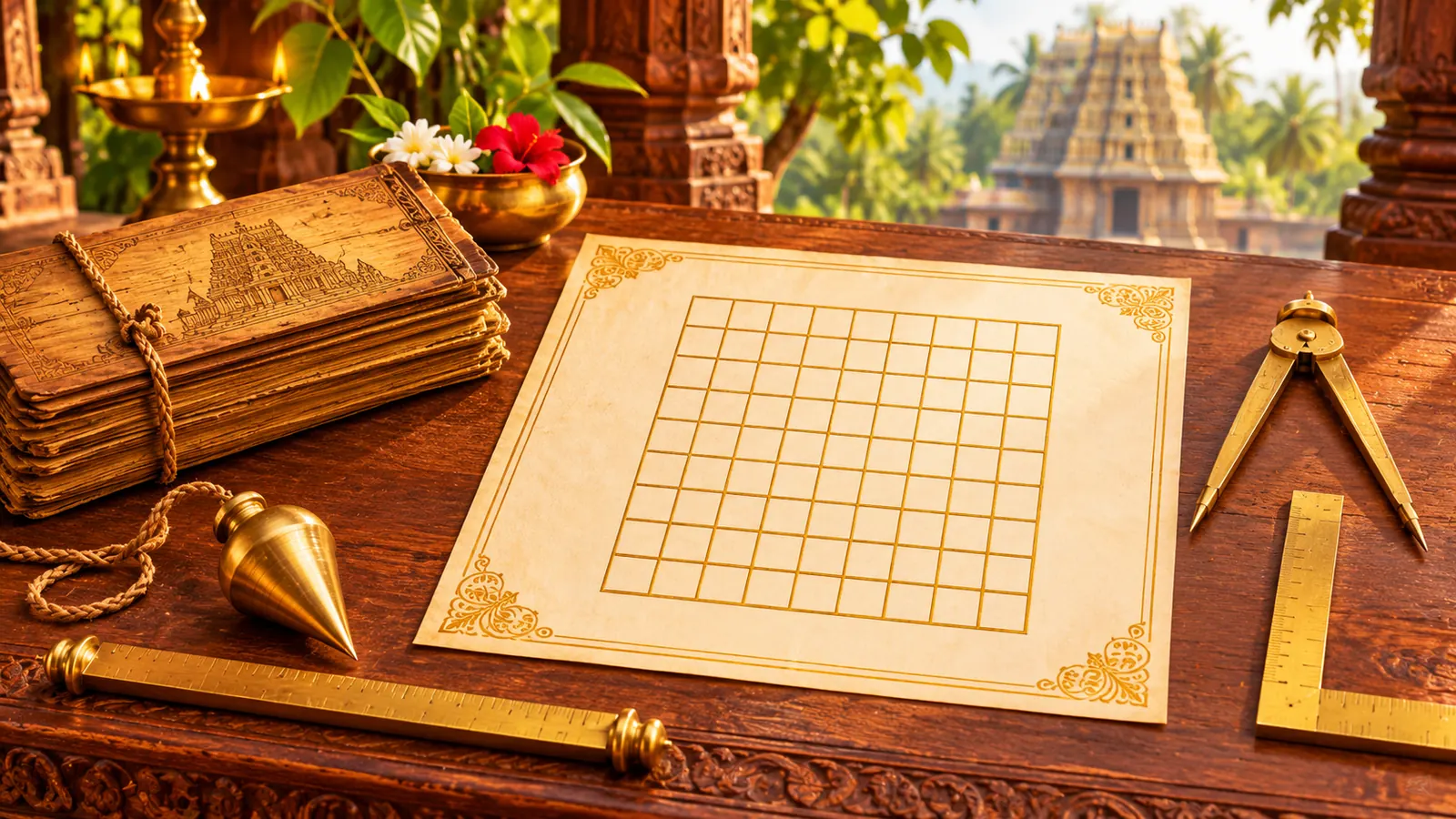
The texts these pages follow
- Mayamatam: the South Indian manual attributed to Maya, on sites, mandalas, houses and temples.
- Manasara: another South Indian treatise, with detailed rules for measurements and building types.
- Samarangana Sutradhara: the great work attributed to King Bhoja of Dhara.
- Brihat Samhita of Varahamihira: its Vastuvidya chapter on sites, the mandala, doors and soil.
- Matsya Purana: its Vastu chapters, including the story of the Vastu Purusha and the Vastu pooja.
- Vishwakarma Prakasha, and the living Telugu tradition of builders and purohits (uccha and neecha, veedhi shoola, Aayadi).
Where these sources or regional practices differ, each page says so plainly. We do not quote chapter or verse numbers we cannot verify.
How to use these pages
Start with the basics: the mandala, the eight directions and the principles of slopes, heights and openings. Then open the page of the room or the house facing you are planning. Each page shows the ideal, acceptable and avoided zones on a simple diagram, with a do and avoid box and answers to common questions.
If your home already has a dosha, read the remedies page before you think of breaking anything. Most problems are eased by moving things, keeping a zone clean, open or heavy, and performing Vastu shanti. Only a few need real structural change, and we say which.
Vastu without fear
The classical texts are practical. They speak of light, air, water, drainage, sound walls and the comfort of the family. They do not ask you to buy pyramids, crystals or special yantras, and neither do we. A house is not cursed because one room is in the second-best place; it is simply less ideal, and there is usually a gentle correction.